


The Rwandan genocide in 1994, with its countless number of mangled bodies, was not the first time the modern world had witnessed a devastating tragedy in Africa. In 1967, the millions of grisly, ravaged victims in Biafra, Nigeria, sent shockwaves around the globe.
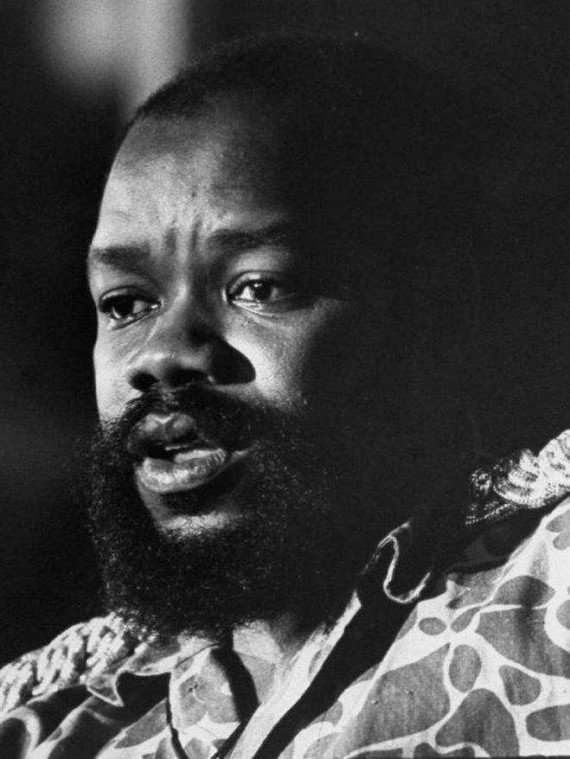
In the vortex of this massacre was Colonel Odumegwu Ojukwu, the Biafran leader who led the secessionist movement. Ojukwu had forsaken a luxurious life to participate in the political movement. His adventurous days came to an end last Friday or Saturday in London. He was 78.
The day of his death was not clear, given differing accounts from several news services; nor was the cause of death clear, though he did have a stroke last year while living in Nigeria.
A big, barrel-chested man with a thick beard, Ojukwu cut a dashing figure at a time when revolution was in the air and the winds of change were sweeping across Africa. He was 33 when he rejected his father’s wealth-wealth accumulated through real estate and transportation-and threw himself almost recklessly into the ethnic rivalry among the northern-based Hausas, the Yorubas in the southwest and the Ibos in the southeast.
Since he was an Ibo, Ojukwu joined his Christian countrymen and was soon propelled into a leadership position, eventually guiding them to secession from a nation dominated by the Hausas.
The secessionist move was precipitated by a weak proposal of federation to settle the ethnic dispute. Since the Ibos were located in the nation’s oil-rich territory, they were a convenient target. They were also envied because of their industriousness and their determination to get the best education.
A full-fledged civil war erupted and government forces invaded the Ibo province. It was simply amazing that the Ibos lasted as long as they did, since they were greatly outnumbered and without sufficient firepower.
While the United States was, for the most part, neutral during the months of conflict, other nations took sides, including Tanzania, Zambia, the Ivory Coast and France, all of which came to the aid of Biafra. On the other hand, the Soviet Union, England and Egypt supported the so-called unifying efforts of the federal forces.
Millions perished, mainly Ibos, in the 30-month-long war, and the graphic images of the conflict were widely televised.
In 1970, the secessionists were soundly defeated and Ojukwu, by this time promoted to a general, fled into exile to the Ivory Coast and later London.
Ojukwu was born Nov. 4, 1933, in Zungeru, Nigeria. He attended Kings College in Lagos and later went to Oxford, where he graduated with honors in history in 1955. Given his wealth, he was clearly a big man on campus, dressing stylishly in the best clothes and tooling around in his flashy MG sports car, spouting Shakespeare and the great political thinkers of the Renaissance.
Such a life was there for the taking, but Ojukwu had other plans and spurned the good life for one in the military.
According to an obituary in the New York Times, he had three wives. He met his first wife, Njedeka, while a law student at Oxford and they married in 1962. His second wife, Stella Onyeador, died in 2009, and he married his third wife, Bianca Odinaka Onoh, a former beauty queen and businesswoman 34 years his junior, in 1994.
