


According to former radio personality and community activist Bob Law, Blacks should consider how the way they spend their money could influence policy in America.
On Tuesday night, Bob Law hosted a forum at First Church of God in Christ in Brooklyn alongside Harlem pastor Reverend Calvin Butts, and Bishop Gerald Seabrooks of Rehobath Cathedral Church to ask Blacks in the community regain their economic power by funneling the money they spend at large fast-food corporations back into Black schools and businesses.
According to Law, consumers of the Black community have more than one trillion dollars in buying power. These numbers were confirmed by the 2012 Nielson report, “African-American Consumers: Still Vital, Still Growing,” released earlier this year. The report found that Black consumers are at the “forefront of social trends and media consumption” and Blacks will have a $1.1 trillion buying power by 2015.
Law told the crowd of about 50 people that as a result of justices denied to the Black community dating back to long before George Zimmerman was acquitted after killing 17-year-old Trayvon Martin, they should use their money as leverage and power to change policy in America.
“We are not outraged because of the [Zimmerman] verdict,” Law said. “At no time are black people awarded justice. What has changed since 1857?”
Law called for a boycott on the fast-food industry, which he said would be particularly hurt by the lack of Black spending. According to a 2013 report by the Center for Disease Control and Prevention, Black adults consume a higher percentage of calories from fast food companies compared to non-Hispanic white and Hispanic adults.
“Even though they are in need or our dollars, they don’t treat us as if we are important,” Law said. “Every community benefits from Black spending except for the Black community.”
Law belongs to the “Million Dollar Black Spending Power Campaign” established in January, which seeks to redirect $20 each week from every Black consumer in the nation towards Black-owned schools, businesses, and research centers. He noted that Black institutions are in danger because of the lack of funding.
“Everything that serves us is being shut down,” Law said.
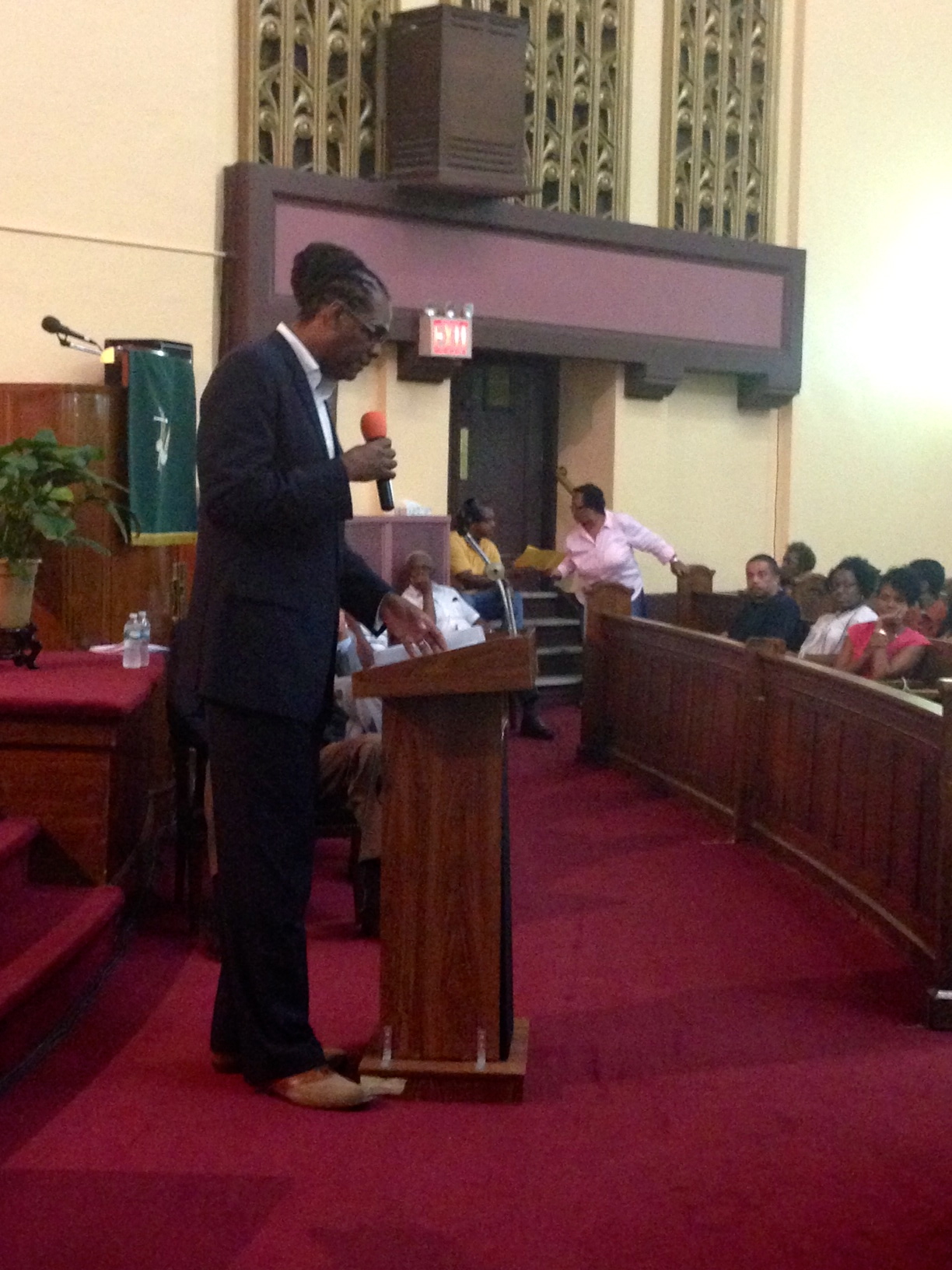
Robert E. Cornegy, elected district leader in Brooklyn and candidate for City Council, specifically spoke about the impeding closure of the Interfaith Medical Center, a hospital in Brooklyn that has been battling financial troubles.
“The hospitals in Central Brooklyn that were designed to cater to people of color are under attack,” Cornegy said. “The reality is Interfaith has been offered $15 million to honor the closure plan, but no money to keep it open.
“We have to stand up and advocate for ourselves,” he added.
Law said that with a re-focus of Black consumerism to Black institutions, places like Interfaith Medical Center would be able to flourish.
“How dare you allow institutions that are saving the lives of future generations to fail due to lack of funding,” Law said. “We have to use what we have more strategically and effectively.”
