


It’s little wonder people are so confused and uncertain about the outbreak of Ebola, when you have fear outrunning facts, rumors taking precedent over reality, and some elected officials playing political football with the virus.
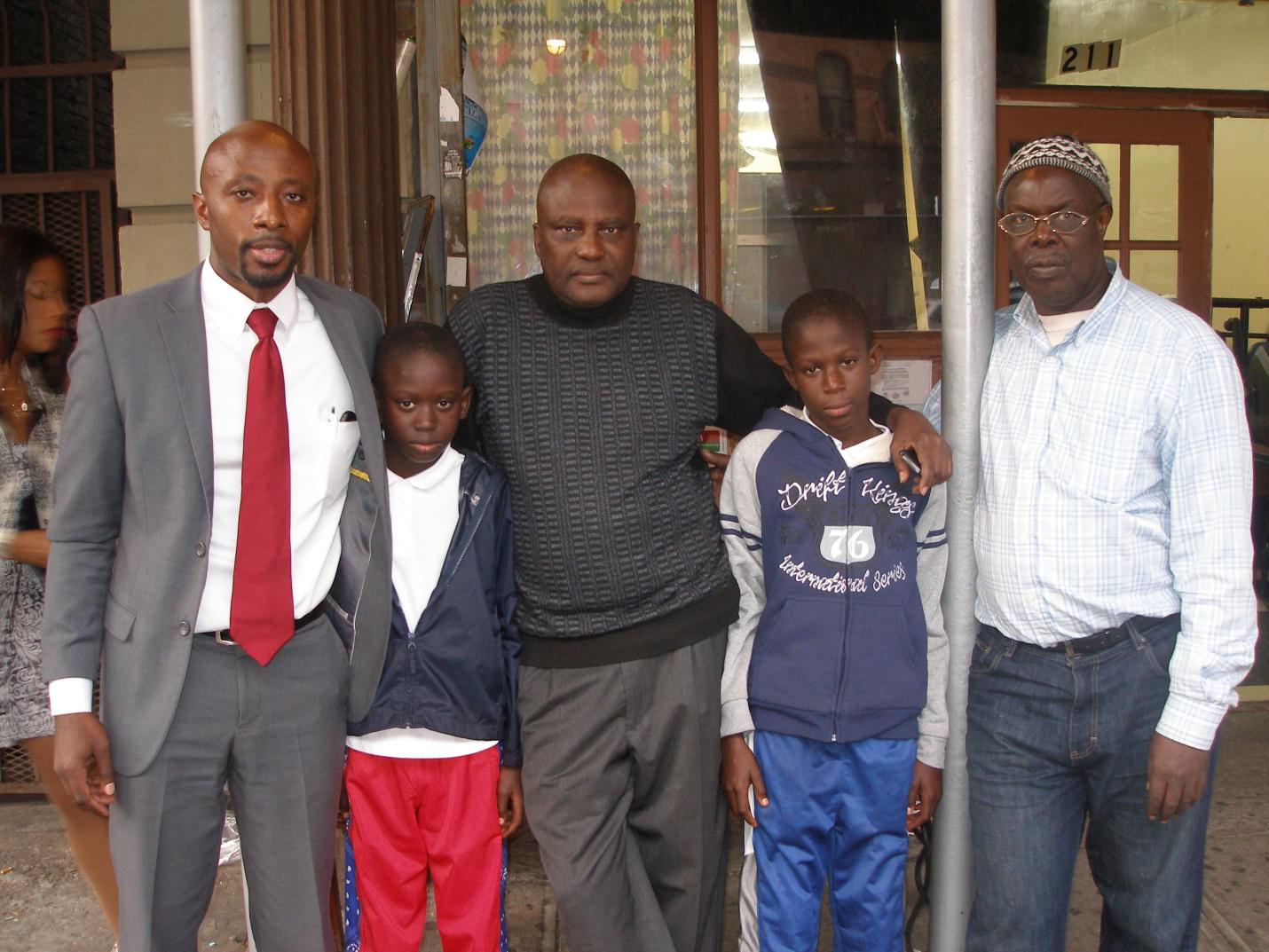
One issue that is gradually getting attention is the harsh treatment some Africans are receiving over misperceptions of the disease. Tuesday afternoon, Diop Ibrahimo and his wife, Sokhna, came to state Sen. Bill Perkins’ office to talk about what had happened to their friend Ousmane Drame and his sons, Amadou and Pape. They had been beaten by classmates because they were Africans and thought to have Ebola. “My name is not Ebola, it’s Amadou,” Drame’s youngest son told his tormenters.
This was what Drame told Diop Ibrahimo and his wife. But they had their own story to tell. Their 9-year-old daughter had endured similar insults and teasing at Dream Charter School on East 103rd.
“She came home from school last week very upset,” said her mother, who, like Drame, is a native of Senegal. “She asked me, ‘Mommy, do I have Ebola?’ I told her no. Apparently she had coughed in gym and the kids said she had Ebola. You are from Africa, that’s why they say that.”
The next day, she called the school and explained to the office what had happened and they promised to see that it would never happen again. Since then, her daughter has returned to school. “And for Halloween, she wants to get a nurse’s costume so she can help the sick people in Africa,” her mother said.
Wednesday afternoon, Perkins and Sokhna Ibrahimo called the Amsterdam News with a follow-up story on Ibrahimo’s daughter, reporting that she was still being bullied and harassed at school. Furthermore, the harassment had spread to some of her friends as well. Moreover, Ibrahimo’s son, who is 21 and a student at the Borough of Manhattan Community College, has also experienced harassment. Her son had the sniffles and “one of the students in the classroom said that he had Ebola,” Sokhna Ibrahimo explained. “These attacks have got to stop.”
Perkins agreed. He said when he talked to the Department of Education, he was told that a memo had been sent out regarding Ebola and bullying. “But this issue requires more than a superficial memo, action is required if we are stop our African residents from being humiliated,” Perkins said.
“The problem with this, and it’s not just with us, is that people don’t understand that there are many countries in Africa, and even all the people in Sierra Leone, Guinea and Liberia do not have Ebola,” Diop Ibrahimo said. “There’s a lack of information on Ebola, and until that’s fixed, we will continue have a lot of people living in fear.”
Perkins said his office is busy each day trying to allay the rampant misinformation and make sure people are getting advice from health officials and medical authorities, not politicians. “We will be hosting a community dialogue, an emergency meeting, here on Wednesday,” he said. “And on Thursday at City College, there will be a community forum on Ebola. So the word is getting out, but there’s still so much more to be done to inform people and to set aside some of their unwarranted fears.”
He said the rumors have not helped the situation, particularly the one that people are not frequenting African-owned businesses. Sokhna Ibrahimo said that she has noticed a slowdown in her business as a hair braider, and a friend of hers who works as a home attendant told her that some African workers have not been called for assignments. There are also reports that folks are refusing to ride in cabs and liveries driven by Africans and that some services from delivery men of African descent are unwelcomed.
Muhammad, who sells Shea butter, African Black Soap, incense and various oils, said his business is going OK. “I am from Mali, and people are not staying away from me, though they know I’m from Africa,” he said.
A similar calm was expressed by Jerabi at Jacob’s Restaurant at 143rd Street and Frederick Douglass Boulevard, who said there were no signs that folks are avoiding them. “Our customers are still coming here in the same way as always,” he said.
In a Tuesday afternoon press conference from the South Lawn of the White House, President Barack Obama placed the Ebola crisis in a larger context, which should set aside some of the politicking of the disease by Govs. Andrew Cuomo and Chris Christie, each of whom agreed to impose restrictions that went beyond the guidelines issued by the CDC in terms of protocols and quarantines.
“No one is doing as much as America to contain and to ultimately eliminate this outbreak,” Obama said, referring to the U.S.’s deployment of military and response teams to Africa. “We’ve increased the number of Ebola treatment units … we’ve expanded the pipeline of medical personnel, quickness and supplies. We’ve launched an aggressive educational campaign in country.
“The bottom line is that they are doing what it takes to make sure that health care workers and medical personnel from all countries have what they need to get the job done. And the good news is, it’s beginning to have an impact.”
While he did not speak directly to the controversy surrounding the governors’ positions on quarantines, he noted that decisions should be “sensible … and based on science.”
There is also reasonably good news on the condition of Dr. Craig Spencer, the first New Yorker to contract the disease after working with Doctors Without Borders in Guinea. Friday, Spencer, 33, who lives in Harlem and is now in isolation at Bellevue Hospital, received a blood donation from Nancy Writebol, an aid worker and an Ebola survivor, because she had the same blood type. The same treatment was administered to Nina Pham and Amber Jay Vinson, who contracted the virus after working with Thomas Eric Duncan, who died of the disease.
