


This is not your great-grandmother’s version of “The Wizard of Oz” — and nor should it be.
For over a century, “The Wizard of Oz” has captivated imaginations, blending epic battles between good and evil with the allure — nay, the implied promise — of transformation. That’s one reason the 1939 film classic, starring Judy Garland, has become a cornerstone of American cinematic culture, influencing everyone from Spike Lee to David Lynch. Its transformative message even inspired the Broadway musical “Wicked,” and now, by sheer creative force, it has evolved into a two-part film.
Under the bold direction of Jon M. Chu, this adaptation takes the legacy in a daring new direction, one that feels eerily reflective of today’s political climate.


Cynthia Erivo’s performance as Elphaba is nothing short of historic. Already one award away from achieving EGOT status, Erivo cements herself as a generational standout. It would be a grave injustice if both she and “Wicked” fail to sweep this year’s film awards season.
This first installment of “Wicked” delivers on spectacle, clocking in at 2 hours and 40 minutes. While the film’s brilliance shines through, the runtime is undeniably felt, but Erivo’s portrayal of the misunderstood, green-skinned heroine keeps the story grounded, bringing nuance to Elphaba’s moral complexities. For many people of color, her struggles hit close to home, making her torment deeply resonant. Being a Nigerian woman raised in London is why and how Erivo delivers such an authentic, heartfelt, and commanding performance. She breathes life into Elphaba’s journey from outcast to reluctant icon.
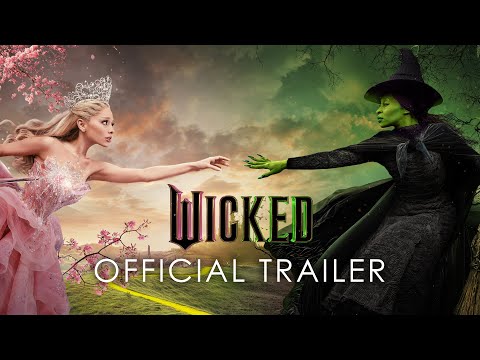
Then there’s her voice: rich, vulnerable, and powerful. Erivo’s talent anchors the film’s emotional core, transforming even the simplest songs into profound moments. She delivers musical highlights like “The Wizard and I” and “Defying Gravity” with a raw emotionality that wraps each note in a proverbial bow.
The story, based on Gregory Maguire’s 1995 novel and adapted by Winnie Holzman and Dana Fox, centers on the evolving friendship between Elphaba and Glinda (Ariana Grande). Their bond, initially strained during their time at Shiz University, deepens into a layered tale of love, loyalty, and empowerment.
Grande’s portrayal of Glinda radiates with boundless energy, offering comedic relief through near-flawless body language — subtle hair flips, perfectly timed gestures, and flamboyant movements that elevate even the smallest moments. While nodding to the “dumb blonde” stereotype, Grande skillfully weaves in moments of emotional depth, hinting at a more nuanced and complex arc beneath her character’s bubbly exterior.
Chu, known for “Crazy Rich Asians” and “In the Heights,” delivers a visually dazzling Emerald City, brought to life by production designer Nathan Crowley. Crowley’s work transforms the screen into a modern yet fantastical world, with intricate set designs that captivate the eye.
Adding to the visual brilliance are costumes by Paul Tazewell, the first African American male costume designer to be nominated for an Academy Award for Best Costume Design (for Steven Spielberg’s “West Side Story”). Tazewell’s designs in “Wicked” are nothing short of spectacular, with standout pieces such as Elphaba’s seashell-spiraled glasses and Issey Miyake-inspired wardrobe. The attention to detail is both eye-popping and delightful, elevating the film’s esthetic to new heights.
Chu’s maximalist style ensures there’s always something to see, but he balances the spectacle with well-placed quieter moments, especially as the chemistry between Elphaba and Glinda deepens. This chemistry is the film’s heartbeat, carrying the narrative through heavier themes, such as the plight of Oz’s talking animals (voiced by Peter Dinklage as Dr. Dillamond). The exploration of justice, belonging, and alienation feels timely, resonating deeply as Erivo captures Elphaba’s internal struggles with nuance and power.
That said, not every emotional beat lands perfectly. Glinda’s public display of support for Elphaba, for example, feels overly calculated, bordering on performative. Still, the film excels in its inclusive, multiracial casting, allowing viewers to interpret its broader implications on their own terms — a brilliant choice by Chu.
With “Wicked Part Two” scheduled for November 2025, one can only hope its messages of friendship, resilience, and justice inspire meaningful conversations and change.
“Wicked” offers a visually ambitious reimagining of Oz, anchored by Erivo’s spellbinding performance and a heartfelt exploration of friendship. It’s a spectacle worth experiencing and a story worth celebrating.
For more info, visit www.wickedmovie.com.
