
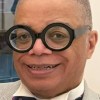

“When you were born in 1934 … there was still Jim Crow … There was still plenty of hardship and sorrow … But, there was also joy — Randy was a jovial person … When we remember him, we must remember to live joyfully. Like Randy, we must counter life’s difficulties with the joy that faith provides …” On a snowy morning at the historic Abyssinian Baptist Church, this was the summation of remarks by Rev. Dr. Nicole L. Showell as the officiant at Saturday’s funeral service for Elwood Fentress Dupree, known affectionately as E. Randy Dupree.
Held in high regard in every part of Harlem, he was born April 26, 1934, in Greenville, S.C., he died December 1, 2025, at 91, after a life well-lived and 58 years of marriage.
In 1951, he graduated from Eppes High School before winning a sports scholarship to attend Florida Normal and Industrial College (today, Florida Memorial University). A science student, he became a charter member of the school’s Omega Psi Phi Fraternity chapter.
Before college, he was already aware of his future wife, Elois Mae Smith. Her older sister was a high school friend, but, as he once told me, “it wasn’t until after I got back from serving in France, during the Korean conflict, that I really noticed Elois. She had grown up nicely!”
By then, both had moved to New York. During a holiday visit back to Greenville and spying her sitting on her family’s porch, he made up his mind. “That girl will be my wife!” He told me he told himself; and in 1967, he at last told Miss Smith and they married on July 1. Two years later, their son, Randy LeMar Dupree, was born.
Before serving as an army medic, he became a high school science teacher in Florida. Once discharged from military service, he had a series of jobs , in New York, working with youth and became a director of the Police Athletic League in Brooklyn.
Continuing his education, Dupree earned a social work master’s degree from Columbia University. During his graduate studies, he was both student body president and leader of Columbia’s Black Student Caucus. At his graduation, he gave the commencement address.
Michael Henry Adams photos


Throughout a fitting tribute, punctuated by solemn prayer and inspiring hymn solos, we learned these particulars of Dupree’s purposeful life. Different aspects came from the likes of elder stateswoman Inez Dickens and New York Attorney General Alvin Bragg (who grew up under Dupree’s tutelage on 139th Street on Strivers Row).
Dupree was deputy director of the city’s bureau of pest control and also worked as assistant commissioner for the city’s Department of Health. Before Bill Perkins, he was the “rat tsar” of his day, combating rodents so effectively that he was engaged as a consultant by the city of London! Before retiring, Dupree served as assistant commissioner of Health Environmental Community Services for nearly 20 years.
Rather than sit idly after so active a career, he parlayed this vast experience in city government into Dupree Environmental Consultant Inc., providing pest control for small businesses.
Some speakers repeated these accomplishments more than twice, and almost all told of the endless enjoyment Randy Dupree offered, in collaboration with his wife, to friends and acquaintances far and wide. This was in the form of rollicking parties with lots of good things to eat and drink, and excellent live entertainment, held inside and out, across multiple levels of their commodious neo-Renaissance style rowhouse designed by Stanford White.
A couple who lauded him did mention, in a perfunctory way, that Dupree was a member, starting in 2004, and then commander of the American Legion Col. Charles Young Post No. 398 in Harlem (a service club established by Black veterans of the First World War to honor an heroic officer, recently renamed to mark Young’s long-overdue posthumous promotion to Brigadier General).
With time running out, it didn’t seem to me that anyone emphasized the full significance this entailed. In discussion with Inez Dickens, I was told, “Then get up and tell them!”
I began, “By now, you probably imagine you’ve heard all there is to know about Randy Dupree, only something important has been omitted. The post has been referred to, superficially, but neither its momentousness, nor Mr. Dupree’s has been explained.
“[It was a] clubhouse for Harlem war veterans, a place where great food and drinks can be had very reasonably. It’s also one of the best venues there is for intimate jazz performances. In New York, locals and people in the know are aware of the post, but paradoxically, worldwide, it’s far better known by jazz enthusiasts everywhere! By the busloads they come here from Japan and Europe every year. For the longest time, welcoming them, as an ambassador of Black culture, there stood the commander. Like the post, Commander Dupree was known by some of the most discerning connoisseurs there are.
“With our contributions and heritage increasingly under attack, gatekeepers like the commander are more important than ever!”
Seeing Elois Dupree and her son (called little Randy throughout the ceremony) smiling appreciatively, I was so glad I’d risked speaking up.
Hail and farewell, Commander Dupree!
