
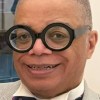

“No, I was not fishing for a compliment. But arrayed in colorful silks and floating chiffon, they were all so elegantly resplendent. So seeing that few men wore coats and none had neckties, I asked, ‘Ladies, when you have made such a wonderful effort, why do men find it unnecessary to follow suit?’ They smiled.”
You’d have sworn it was old home week, Sunday, at the Southampton Inn between 11:30 a.m. and 2:30 p.m. So many Harlemites were on hand, and it certainly felt like it. We were all attending the Southampton African American Museum (SAAM)’s gala annual champagne brunch and awards ceremony. Our commodious surroundings were due to the generosity of the inn’s owner, Harlem resident Dede Moan. It was her husband, Terrence, who was responsible for Thurgood Marshall Academy.
A focal point of Black Hamptons festivities, the delightful brunch was among a series of events hosted last weekend to support the museum. “In a place that’s as white, privileged and unequal as Southampton — reminding people of all the ways that Black lives and Black history here are uniquely American lives and American history, too — is more important than ever,” explained my friend and host Roy Paul, who has a local place in addition to his apartment on Malcolm X Boulevard. “Wherever you look, Hamptons’ communities which were once predominantly African American, are quickly gentrifying,” he cautioned.
(Michael Henry Adams photo)

Resplendently arrayed, Traci Baker Jackson of TJB Branding, Detective Julie Govantes and nurse practitioner Theretha Gilbert 
Award winner Claude Weir and his sterling wife Yvette 
Awardee Sharon Joseph of Harlem Lanes, remains the only woman to ever open a bowling alley 
Virtuoso jazz flautist Dwayne Kerr produces the sound of an entire trio! 
SAAM dedicated young staff members included Kimberly Reyes Flores, a Long Island University student, and Kellen Jeffries, a University of Connecticut graduate 
Southampton African American Museum co-founder and Executive Director Brenda Simmons and her daughter Tiana Grampus. 
Brearley schoolmates Willa Bernstein. Lisa Downing and Dede Gotthelf Moan. Ms. Moan, who owns the Southampton Inn, donated the venue.
“It’s unbelievable how fast it’s happening,” reiterated the vibrant and knowledgeable Brenda Simmons, who co-founded the museum and serves as its executive director. She and her late aunt (the first in her family who lived in Southampton) worked in the combination beauty parlor-barbershop catering to the Black community (the building that was transformed into the African American Museum). Obtaining the property from another African American for just $10, it was established by Emanuel Seymore, who’d settled in the area during the Great Migration. The Simmons family lived here too. “I still do,” emphasized Brenda Simmons nostalgically. “But our section, which was called ‘the Hill,’ only retains a few Black homeowners today. I’m adamant! The more remote our history grows, the more essential the museum’s mission is.”
Museum patron and brunch chair Jean Shafiroff agrees. “That’s why I’ve stuck with the museum,” she said. Born on Long Island, Shafiroff’s family exemplifies America’s trending diversification. A Roman Catholic, her husband is Jewish. And, she announced at the brunch, that for a little over a year, with the arrival of their first grandchild, their family has been interracial.
Ironically, integration has seemingly reached its nadir as a goal. Even though in almost every sphere it’s still possible for Blacks, women, and other people of color to still be the first, or only one in their field! When bias is so often still denied, many wonder, when and how will equality be achieved?
If Nolan Xavier Wells’ peril has some wondering as to the efficacy or harm of Blacks seeking opportunity in previously all-white environments, Southampton African American Museum honoree Claude Weir has no doubt that attending Staten Island’s then exclusively-white Augustinian Academy was tremendously beneficial for him. “It changed my life,” he exclaimed. As his wife Yvette smiled knowingly, he told those assembled, “attending Dartmouth and Harvard Law were a direct result derived from that first step, the opening up of a whole new universe. When I entered Dartmouth in the autumn of 1969, the Times headline read, ‘Dartmouth accepts 100 Blacks!’ That was more than had been enrolled over their past two centuries.”
For the Southampton African American Museum Community Empowerment Award, Harlem again took center stage. Closed for some time, it might be forgotten what a splash the opening of Harlem Lanes made two decades ago. Bill Clinton was on hand to do the honors cutting the ribbon and Sharon Joseph, the proprietor, was the talk of the town. “I was the first woman of any race to start a bowling alley,” she said, accepting this tribute. “But, I still don’t bowl,” she added, prompting merriment and offers to be her coach.
It’s been a long while since I attended my first Southampton African American Museum soirée at COVID-19’s close. It’s even longer ago since the father of Black Southampton lived before the Civil War. At just five, Pyrrhus Concer started as an indentured servant, working on the Pelletreau farm. Surmounting adversity, Concer triumphed, becoming a whaler, an entrepreneur, and a philanthropist. Other African Americans built and maintained great estates. Some started local businesses, taught school, or otherwise worked professionally. Today this proud legacy endures thanks in part to SAAM! Long may it flourish!
